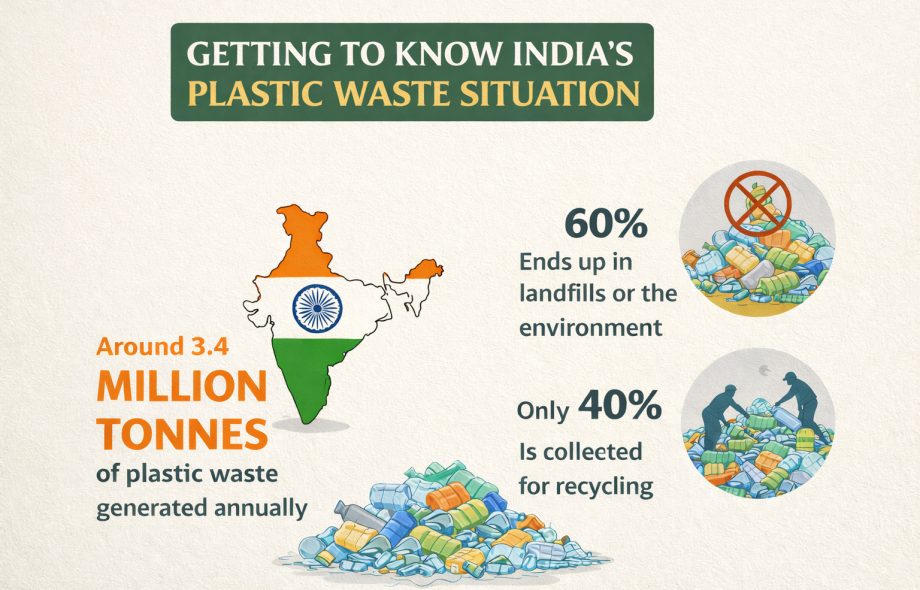
The ecosystem of plastic garbage in India is one of a kind and complex. The country makes a mix of plastic garbage from people who have already used it, industrial leftovers, packaging debris, and agricultural plastics. A lot of this trash comes from cities where people buy a lot of things.
Because it lasts a long time, is light, and is cheap, plastic is one of the most useful and commonly utilised materials.
Modern technologies are making plastic recycling in India possible
Sorting, cleaning, shredding, melting, filtering, and pelletising are all steps that plastic trash usually goes through. You can use the last recycled granules to make pipelines, packaging materials, home goods, car parts, building materials and textile fibres. It is also common to process HDPE and LDPE from bags and containers. Recycling plastic in India is not only good for the environment, but it also helps the economy a lot. It helps thousands of factories and small stores make recycled granules, make new products, or offer waste management services.
The Plastic recycling India process is made further harder by the fact that not many people know about it and the garbage collection system isn’t good enough. The informal recycling industry typically works in dangerous settings without the right safety safeguards. The profitability of recycling enterprises is also affected by changes in the price of recycled granules and the competition between recycled and new plastic. Another problem is that there aren’t any consistent recycling standards or quality certificates.
Summary
There are new Plastic recycling India being built all over India to address the increased need for recovered materials. These factories make high-quality recycled granules by using innovative machines, sorting garbage in a methodical way, and having washing and extrusion lines with a lot of capacity.
 :
https://in.pinterest.com/HikonIndiaOfficial/
:
https://in.pinterest.com/HikonIndiaOfficial/